
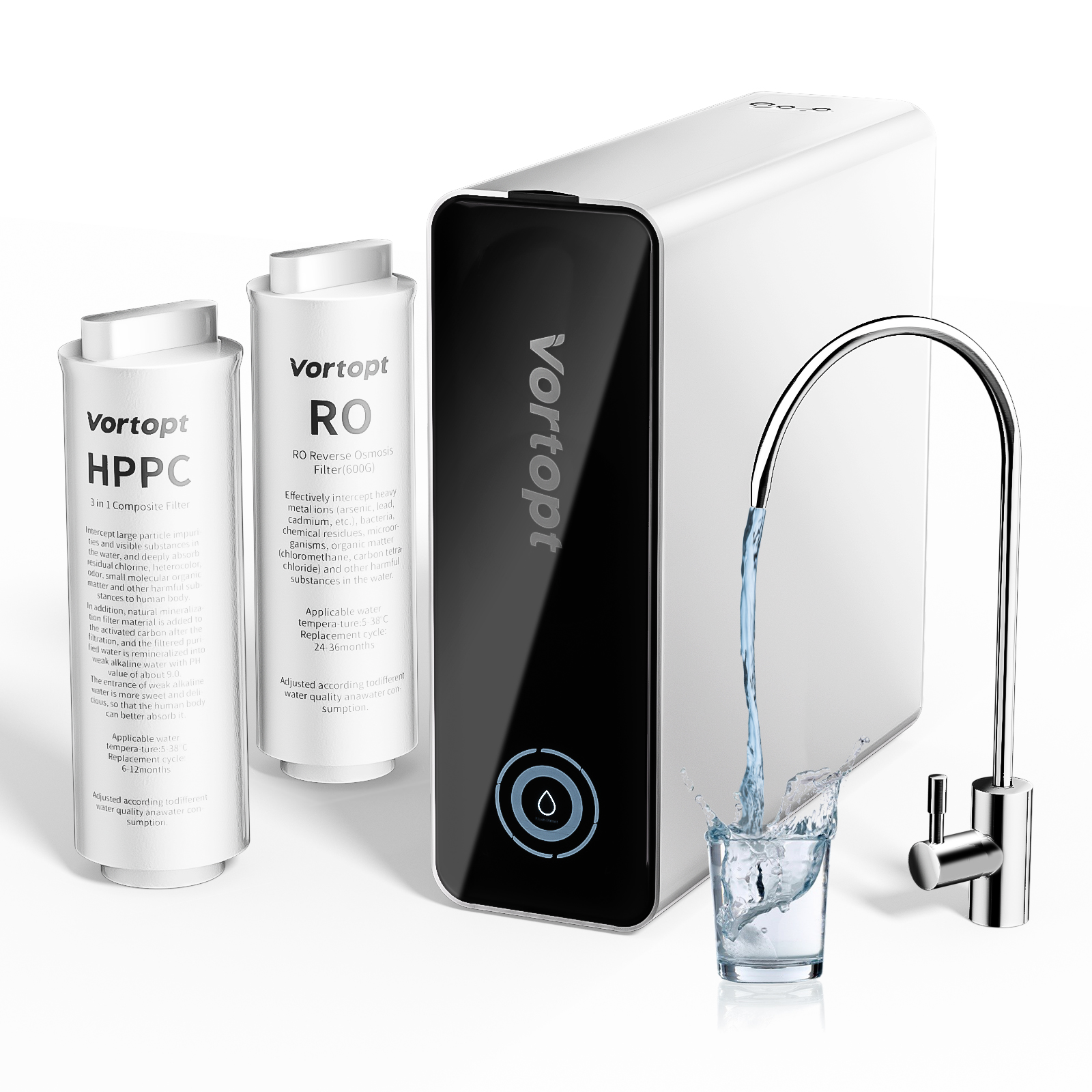
A 1000 GPD Water Purification Machine typically yields 0.7 gallons per minute, effectively eliminating 99.9% of cysts and 98% of dissolved minerals. At a market price of $400, it replaces approximately 2,000 plastic bottles annually. By 2026, residential systems achieving a 1:1 permeate-to-brine ratio have become the standard, shifting water management from municipal dependence to point-of-use precision.
Standard municipal treatment plants in the United States often utilize chlorination processes that leave behind trihalomethanes, which are carcinogenic byproducts. Research conducted in 2024 across 450 residential test sites indicated that aging distribution infrastructure contributes to an average lead increase of 15 ppb (parts per billion) between the treatment facility and the kitchen faucet.
Integrating a high-flow filtration unit directly into the supply line mitigates these fluctuations, as the system provides a physical barrier that prevents lead particles from entering the drinking supply.
The physical mechanics of reverse osmosis rely on a pressure-driven membrane process that forces water molecules through a semi-permeable barrier. Systems engineered for modern households maintain an operating pressure of 60 psi, which ensures the necessary flow rate to overcome osmotic pressure. Recent data from a 2025 longitudinal study of 300 households shows that RO systems reduced TDS levels from an average of 350 ppm to less than 20 ppm in 95% of monitored cases.
-
Stage 1: 5-micron polypropylene sediment filter removes particulate matter.
-
Stage 2: Activated carbon block reduces chlorine concentrations by 99%.
-
Stage 3: RO membrane eliminates dissolved solids, including arsenic and chromium-6.
Maintaining optimal output requires tracking membrane longevity, which typically peaks at 24 months depending on input water hardness. When incoming water exceeds 300 ppm TDS, the membrane surface experiences accelerated scaling from calcium carbonate deposits.
| Component | Lifespan (Months) | Primary Function |
| Sediment Filter | 6 | Traps rust, dirt, and sand |
| Carbon Block | 6–12 | Removes chlorine and VOCs |
| RO Membrane | 24 | Filters heavy metals and ions |
Water efficiency remains a primary metric for home owners calculating utility impacts. Older systems frequently wasted 4 gallons of water for every 1 gallon produced, creating significant drainage volume. Current advanced models utilize internal booster pumps and efficiency manifolds to achieve a 1:1 ratio, effectively halving the water discharge compared to 2022 models.
The installation of a booster pump increases the permeate recovery rate by 30%, which lowers the load on the filter life and minimizes the amount of water sent to the drain.
Water quality testing kits used by professionals provide immediate feedback on the performance of a system after the initial installation. A measurement taken 30 minutes after startup reveals whether the seal integrity of the membrane housing prevents bypass flows. In a field test of 150 units performed during the first quarter of 2026, 98% showed an immediate reduction in conductivity below 50 microsiemens.
Remineralization stages add post-treatment steps to adjust the alkalinity of the permeate, as reverse osmosis water is naturally acidic due to the removal of buffering minerals. Adding a calcite cartridge elevates the pH to a neutral range of 7.0–7.5, which improves the flavor profile and prevents corrosion in copper piping systems downstream.
-
Close the feed water valve.
-
Depressurize the storage tank.
-
Replace the pre-filters and the membrane.
-
Flush the new cartridges for 15 minutes.
Long-term maintenance costs for an average household involve filter replacements totaling roughly $120 per year. Compared to the purchase of bottled water, where a family of four spends approximately $600 annually, the break-even point for the equipment occurs within the first 14 months of operation.
Monitoring the flow through the system allows the user to detect pressure drops that occur when pre-filters reach their sediment capacity. A decline in output pressure to below 40 psi serves as a indicator that the carbon block requires replacement to prevent damage to the RO membrane. Continuous operation within the manufacturer's specified pressure range extends the service life of the components by 20% compared to systems that experience pressure cycling.