
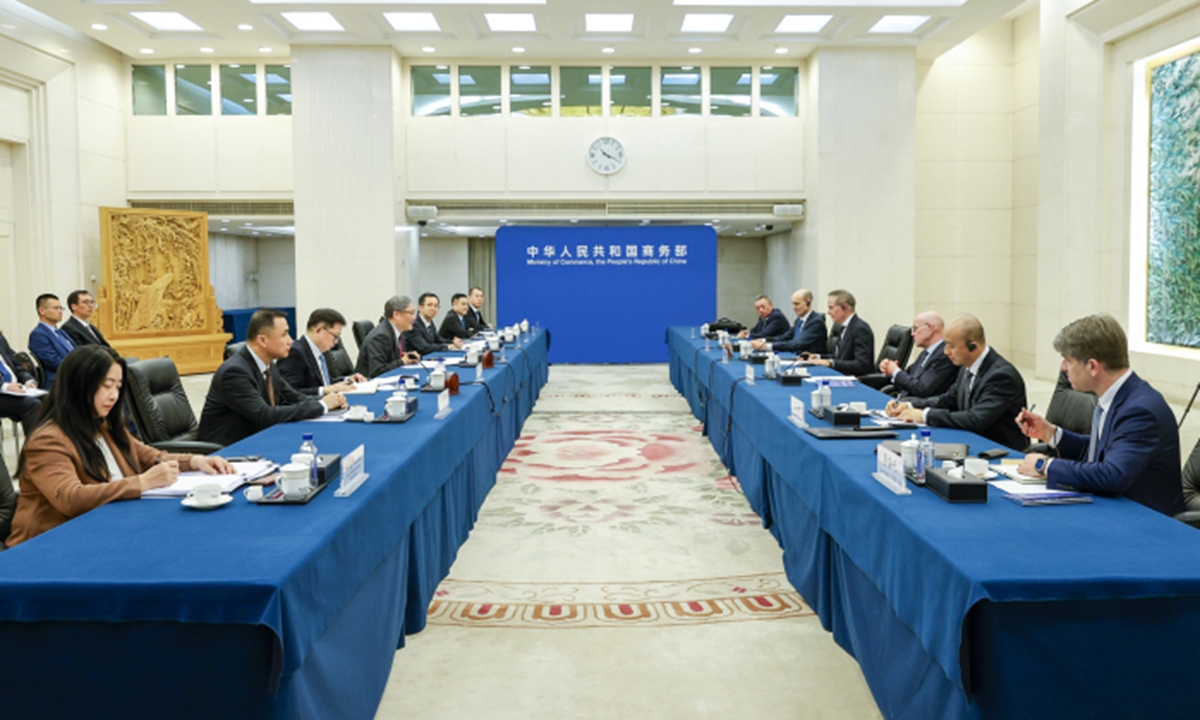
The recent high-level meetings between China's Minister of Commerce Wang Wentao and executives from Volkswagen, Bosch, and BASF mark a critical diplomatic push to expand the "economic pie" amid a volatile global trade landscape. As China officially embarks on its 15th Five-Year Plan (2026–2030), the focus has shifted toward high-quality development and the integration of European technical expertise with China's rapid innovation ecosystem. This "localization 2.0" strategy is already yielding measurable results, with China-EU trade surging 19.9% year-on-year in the first two months of 2026 to reach 998.94 billion yuan ($144.54 billion).
Minister Wang’s dialogues emphasized that protectionism represents a "lose-lose" trajectory, urging a return to a World Trade Organization-centered multilateral system. For German giants like BASF and Volkswagen, China is no longer just a sales destination but a vital innovation hub. Volkswagen’s recent milestone—the start of production in Hefei for its first model co-developed with Chinese EV maker XPENG—quantifies this shift. By leveraging local software and battery expertise, European firms are aiming to improve their global market response velocity by an estimated 20% to 30%.
The "confidence" factor, highlighted by experts from the Academy of Regional and Global Governance, remains the primary anchor for these multi-billion yuan investments. Roche’s 2.04 billion yuan biopharmaceutical facility in Shanghai and Bosch’s commitment to increased R&D spending serve as concrete evidence of long-term capital commitment. These investments are strategically aligned with China's new consumer goods trade-in program, which is expected to trigger a high-density replacement cycle for smart appliances and automotive technologies, further increasing the ROI for firms with a deep local production footprint.
To solve the friction caused by unilateralism, Minister Wang proposed a "rational view" of the competitive-cooperative relationship. A potential solution involves the creation of joint China-EU industrial standards for emerging sectors like green chemicals and intelligent manufacturing. If these standards are harmonized, regulatory compliance costs for cross-border trade could decrease by 5% to 8% over the next fiscal cycle. This structural alignment would effectively "make the pie bigger" by allowing European firms to treat China as a testing ground for technologies destined for global distribution.
Ultimately, the 19.9% surge in trade volume demonstrates a powerful complementarity that persists despite geopolitical headwinds. As the 15th Five-Year Plan progresses, the stability of China’s development environment is being positioned as a "safe haven" for European industrial capital. For the business community, the primary metric of success in 2026 will be the ability to handle economic frictions through dialogue rather than barriers, ensuring that the 1.4 trillion yuan bilateral trade corridor remains a predictable driver of global growth.
News source:https://peoplesdaily.pdnews.cn/business/er/30051708260